
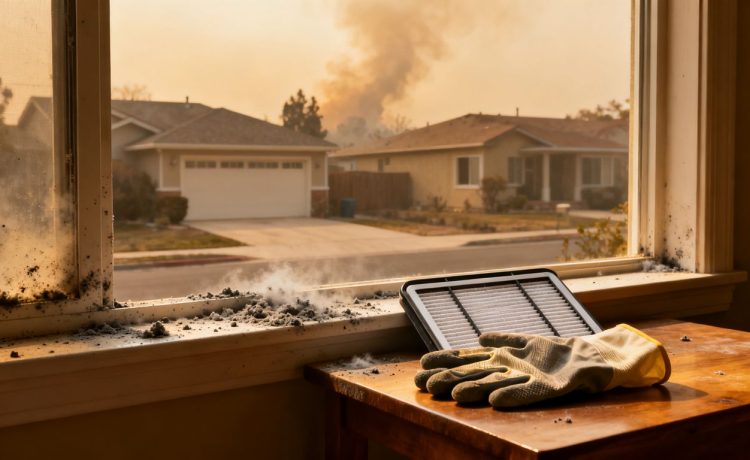
Wildfire smoke can affect a house even when flames never reach the property. Fine particles, ash, gases, and residue move through ordinary openings and settle in rooms, mechanical systems, and belongings. The resulting wildfire smoke damage in homes may be visible at once, or it may become apparent only after odors and surface changes persist.
How smoke particles enter through doors, windows, and ventilation
Smoke enters through gaps around doors, windows, garage doors, and other small openings in the building envelope. It can also arrive through exhaust fans, fireplaces, fresh-air intakes, and heating or cooling equipment when outdoor air is being circulated. Closing openings reduces new exposure, but it does not remove particles that have already entered.
Why smoke odor can remain after visible soot is removed
Odor is not limited to the dark film sometimes left on a wall or ceiling. Smoke compounds can settle into carpet, upholstery, insulation, unfinished wood, clothing, and other porous materials, where they may continue releasing odor over time. A home can therefore look clean while still smelling smoky, particularly when heat, humidity, or airflow disturbs absorbed residues.
How ash, soot, and chemical residues affect surfaces
Ash is a fine, abrasive material, while soot can be oily and difficult to remove without spreading it. Smoke may also leave acidic or chemical residues from burned vegetation, plastics, paint, furnishings, and building materials. These residues can discolor finishes, corrode metals, damage fabrics, and make an apparently minor cleaning job more complex.
Why damage can occur far from the burned area
Wind can carry smoke and ash well beyond the immediate fire zone, and changing weather can expose a neighborhood repeatedly. Particles may enter through a home’s ventilation system or be tracked indoors on shoes, clothing, and pets. A wildfire smoke guide explains why indoor air can remain affected even when a property is miles from the flames.
Health risks of wildfire smoke inside homes
Indoor shelter does not automatically mean clean air during or after a wildfire. Smoke can concentrate in rooms with limited ventilation, and cleaning activities can put settled material back into the air. Health decisions should take priority over cosmetic cleanup, especially when occupants have respiratory or cardiovascular concerns.
How fine particles affect indoor air quality
Fine smoke particles can be small enough to travel deep into the respiratory system when inhaled. Indoor concentrations depend on outdoor conditions, the tightness of the home, filtration, activity levels, and whether particles have settled on surfaces. Odor alone is not a reliable measure of safety; air can be unhealthy without looking or smelling severely polluted.
Which household members may be especially vulnerable
Children, older adults, pregnant people, and individuals with asthma, chronic lung disease, heart disease, or other medical conditions may be more affected by smoke exposure. Pets can also experience respiratory irritation and should not be left in a visibly smoky or ash-contaminated space. Families may need to arrange a cleaner location for vulnerable occupants while the home is assessed.
Warning signs that indoor air may be unsafe
Persistent coughing, wheezing, throat irritation, unusual shortness of breath, chest discomfort, headache, eye irritation, or worsening asthma symptoms deserve attention. Visible haze, a strong smoke odor, recurring soot, or dust that rises during ordinary movement are practical reasons to stop disturbing the space. Indoor air concerns should be considered alongside local air-quality information, not judged by appearance alone.
When to leave the home and seek medical guidance
Occupants should follow evacuation orders and local public-health instructions before attempting to inspect or clean a property. Anyone experiencing severe breathing difficulty, chest pain, confusion, or rapidly worsening symptoms should leave the area and seek urgent medical care. For less urgent concerns, a healthcare professional can help determine whether symptoms require evaluation and whether continued exposure should be avoided.
How to assess wildfire smoke damage in homes
A careful assessment begins only when local authorities say the property is safe to enter. The inspection should cover the structure, contents, air-handling equipment, and less obvious spaces rather than focusing only on rooms with visible soot. The smoke and ash damage checklist can help homeowners organize observations before discussing the loss with an insurer or restoration professional.
Areas to inspect after the smoke clears
Homeowners should examine window and door frames, vents, attics, crawl spaces, garages, cabinets, closets, and rooms with little air movement. Smoke can collect behind and beneath furniture, inside drawers, along baseboards, and around light fixtures. Exterior patios, entryways, and attached garages may also show tracked ash or residue that can be carried farther indoors.
Signs of damage in walls, ceilings, and flooring
Discoloration, streaking, tacky residue, blistered paint, yellowing, and persistent odor can indicate smoke exposure. Flooring may hold particles in seams, under rugs, or within padding, while ceilings and walls can show uneven deposits around vents and corners. Materials should not be scrubbed aggressively before documentation because cleaning can alter evidence of the original condition.
Checking HVAC systems, filters, and ductwork
Filters should be examined for ash, soot, and unusual loading, but the system should not be run merely to test it. Blowers and ducts can redistribute particles throughout the home, and contaminated equipment may require specialized inspection before normal operation resumes. A qualified technician or restoration professional can determine whether components can be cleaned safely or need replacement.
Documenting damage with photos and written records
Photographs should show both broad room views and close details, with dates and locations recorded for each image. Homeowners can keep receipts, cleaning estimates, discarded-item records, conversations, and notes about odors or symptoms in one file. A practical inventory usually includes the item, its condition, approximate age, purchase information, and the action taken.
For a consistent record, the inspection can be organized room by room:
- Photograph surfaces, contents, filters, and visible ash before moving them.
- Record odors, residue, discoloration, and areas that were inaccessible during the first visit.
- Separate potentially contaminated items from unaffected belongings when possible.
- Save receipts for temporary housing, protective equipment, cleaning, and emergency repairs.
This process gives an adjuster and a restoration company a clearer picture of the loss. It also helps the homeowner remember damage that might otherwise be overlooked once cleaning begins.
What homeowners can clean safely
Some limited cleaning may be reasonable after authorities confirm that the home is safe and the air outside permits ventilation. The correct approach depends on the material, the amount of residue, and the occupant’s ability to avoid exposure. When contamination is extensive, postponing cleanup until the home has been professionally evaluated is often the safer choice.
Ventilating the home without bringing in more smoke
Opening windows and doors is helpful only when outdoor air is cleaner than the air inside. Homeowners should check local air-quality conditions, close openings during smoke events, and avoid exhausting contaminated air through occupied areas. Portable air cleaners or a properly assessed HVAC system may provide a better temporary approach than unrestricted ventilation.
Cleaning hard, nonporous surfaces
Glass, sealed countertops, finished metal, and some washable plastics can generally be cleaned with a suitable detergent solution and clean water. Small sections should be tested first, and cloths or rinse water should be changed often so residue is not redistributed. Surfaces should be dried afterward, since lingering moisture can create a separate maintenance problem.
Handling fabrics, upholstery, and personal belongings
Textiles should be handled gently and moved in a way that does not shake settled particles into the air. Washable items may be laundered separately according to their care instructions, while upholstery, rugs, leather, and delicate belongings may need specialized treatment. Homeowners should avoid assuming that a pleasant fragrance or surface spray has removed absorbed smoke compounds.
Protecting yourself with appropriate safety equipment
A properly fitted N95 respirator can reduce inhalation of airborne particles, but it does not make every contaminated environment safe to enter. Gloves, eye protection, long sleeves, and footwear that can be cleaned or discarded help limit contact and tracking. Children, pets, and people with medical vulnerabilities should remain away from active cleanup areas.
Why dry sweeping and standard vacuuming can spread particles
Dry sweeping, leaf blowing, and ordinary vacuuming can lift ash and soot back into the breathing zone. The safe ash cleanup guidance recommends damp methods and cautions against activities that make settled material airborne. Cleaning should remove particles rather than simply move them from the floor to the air, and a professional should be consulted when residue is heavy or widespread.
What to discard, restore, or replace
The decision to keep or discard an item should consider contamination, porosity, health risk, cost, and sentimental value. Some goods can be restored, while others are unsafe or impractical to clean thoroughly. The decision should be documented before disposal whenever doing so does not create a health or safety risk.
Food, medicine, and other items that may be contaminated
Food, medicine, cosmetics, and personal-care products exposed to smoke, ash, heat, or firefighting water may no longer be suitable for use. Packaging can allow odors and residues to pass through, and temperature changes may affect medicines even when containers appear intact. When there is uncertainty, the item should be set aside and guidance sought from the relevant health or safety authority.
Porous materials that absorb smoke and odor
Carpet padding, insulation, upholstered furniture, mattresses, unfinished wood, books, and clothing can absorb smoke deeply. Washing may help some fabrics, but severe odor or visible residue can remain in fibers and hidden layers. The smoke-damaged items guide offers a useful framework for separating items that may be salvageable from those that should be discarded.
Electronics, appliances, and mechanical systems
Soot and ash can enter electronics, motors, controls, and vents, where they may cause corrosion or electrical faults later. Appliances should be unplugged when safe, and they should not be powered on simply to see whether they work. An appropriate technician can inspect sensitive equipment before it is cleaned, repaired, or returned to service.
Important documents, photographs, and sentimental belongings
Documents and photographs may be damaged by smoke, soot, water, heat, or humidity, but immediate disposal is not always necessary. Items should be handled minimally, kept in a clean, dry location, and photographed for the inventory. Conservators and specialized restoration professionals may have options for fragile materials that ordinary household cleaning would destroy.
When professional restoration is safer than DIY cleaning
Professional help is warranted when smoke has affected multiple rooms, HVAC equipment, insulation, electrical systems, or valuable belongings. It is also appropriate when occupants have symptoms, the residue is extensive, or the homeowner cannot safely determine what has been contaminated. Safety should guide every cleaning decision, not the desire to return the house to normal as quickly as possible.
How insurance and professional restoration fit in
Insurance policies differ, so homeowners should review their declarations, exclusions, limits, and duties after a loss. Smoke damage may involve both the dwelling and personal property, while temporary living expenses and emergency measures may be addressed separately. The insurance and smoke damage resource provides background for organizing questions about inspection, testing, cleaning, and restoration.
Reviewing homeowners insurance coverage for smoke damage
The homeowner should notify the insurer promptly and ask what deadlines, documentation, mitigation steps, and approvals apply. Coverage can depend on the cause of the smoke, the policy language, the type of property affected, and the limits available. Policyholders should avoid treating a general explanation as a coverage decision and should request important instructions in writing.
Creating a thorough inventory for a claim
An inventory is stronger when it includes damaged structural areas, contents, cleaning expenses, temporary repairs, and items that may need specialized handling. Receipts are useful, but photographs, manuals, bank records, warranties, and comparable replacement information can also support ownership and value. The inventory should be updated as additional damage becomes visible.
Questions to ask a smoke damage restoration company
Homeowners can ask what the inspection includes, which materials will be tested, how contents will be handled, and how the work will be documented. They should also clarify the proposed scope, estimated timeline, equipment, pricing, communication process, and coordination with the insurer. A written plan makes it easier to distinguish emergency stabilization from later cleaning and rebuilding.
Why testing and remediation methods matter
Smoke residue is not always visible, and different materials respond differently to cleaning. A credible assessment should explain what was observed, what is being sampled or measured, why a method is appropriate, and how completion will be judged. The health effects of wildfire smoke are a reminder that persistent exposure deserves more careful attention than a quick deodorizing treatment.
Avoiding common mistakes before an adjuster or contractor arrives
Homeowners should avoid discarding large quantities of property, making permanent repairs, or aggressively cleaning evidence before documenting the condition, unless immediate action is needed to prevent further damage. They should preserve invoices and note who authorized each step. At the same time, health and safety take precedence: dangerous materials, unstable structures, and severe contamination should not be left untouched merely to preserve a photograph.
How to prevent lingering smoke damage
Prevention after cleanup is largely a matter of controlling particles, maintaining air-handling equipment, and responding early to future smoke events. Odor should not be the only measure of success; filters, surfaces, and indoor air conditions also deserve ongoing attention. A household plan can reduce both exposure and the amount of residue that settles during the next event.
Replacing filters and maintaining the HVAC system
Filters should be replaced according to the system’s needs and after unusually smoky conditions, using a size and type approved for the equipment. Homeowners should arrange inspection when filters load quickly, airflow changes, or smoke odor returns whenever the system operates. Ducts, coils, blower compartments, and outdoor-air settings should be evaluated by qualified personnel when contamination is suspected.
Improving filtration and sealing indoor air leaks
Sealing obvious gaps around doors, windows, penetrations, and utility openings can reduce the amount of outdoor smoke entering the home. Portable air cleaners and higher-efficiency HVAC filtration may help when compatible with the equipment and properly maintained. Filtration works best when paired with closed windows during smoky periods and reduced indoor activities that create additional particles.
Monitoring indoor air quality after cleanup
Indoor conditions should be checked after restoration, particularly if odors, irritation, or visible residue returns. Homeowners can follow local air-quality readings and use an appropriate indoor monitor as one source of information, while remembering that no single reading captures every contaminant. Persistent symptoms or unexplained odor should prompt another professional assessment rather than repeated masking with fragrance.
Preparing the home for future wildfire smoke events
Before the next smoke event, households can identify a room that can be kept closed, gather respirators and replacement filters, and confirm how to receive evacuation and air-quality alerts. Outdoor-air settings should be understood in advance, and vulnerable occupants should have a plan for relocating if indoor conditions deteriorate. Preparation turns a rushed response into a set of manageable decisions.